

The Value of Financial Advice: Confidence at Every Stage of Life

In today’s complex financial landscape, the role of professional advice has never been more important. Whether navigating retirement planning, investment strategies, or aged care decisions, clients are increasingly turning to advisers not just for financial guidance, but for peace of mind.
Why It Matters
Research conducted by several respected industry bodies highlights that financial advice provides emotional, financial, and practical benefits to clients across all demographics. From helping individuals feel more confident about their financial future to offering tailored strategies that support long-term goals, the impact of advice goes far beyond the bottom line.
Emotional & Financial Benefits Advised clients feel more secure, less stressed, and more satisfied with their financial wellbeing. Nearly nine in 10 say advice makes them feel financially confident, and two in three are highly satisfied with their wealth¹ . More than 60% report feeling less anxiety, worry, sadness, and disappointment when it comes to managing their finances and three out of four reported saving time enabling them to spend more time on meaningful activities like leisure, time with family, and exercise².
Behavioural Benefits Advisers help clients stay disciplined, save more, and prepare for the unexpected, feeling better equipped to handle financial shocks². Advisers can empower clients by helping them track their spending, allocate funds for essentials, and build emergency savings³.
Generational Impact From Gen Y to Baby Boomers, advice delivers value across life stages. Younger clients see advice as a form of self-improvement, while older clients benefit from retirement and estate planning support. Across all age groups, advised individuals report higher quality of life and financial confidence.
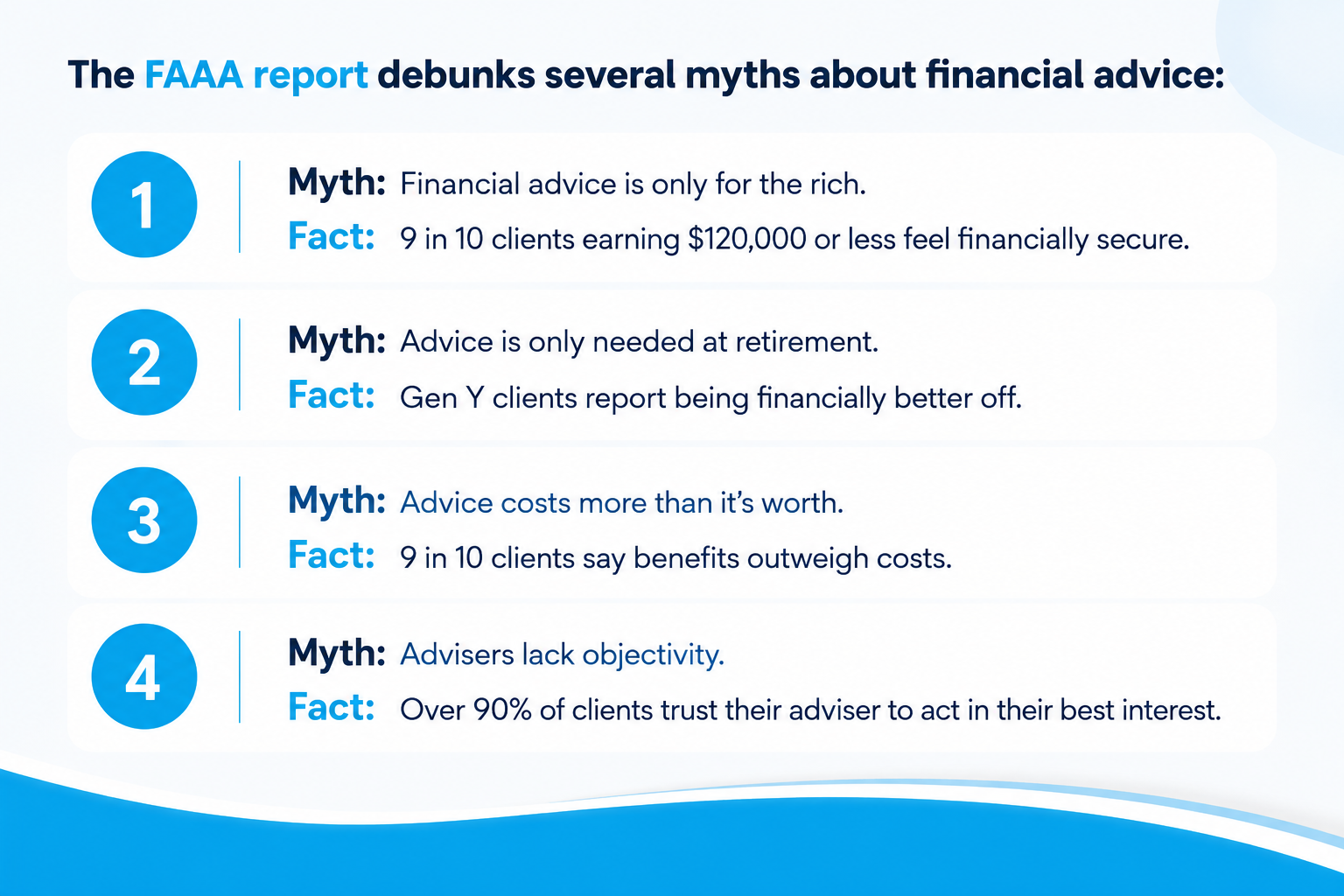
Busting Common Myths
Advice That Grows With You
Financial advice evolves with your life⁴:
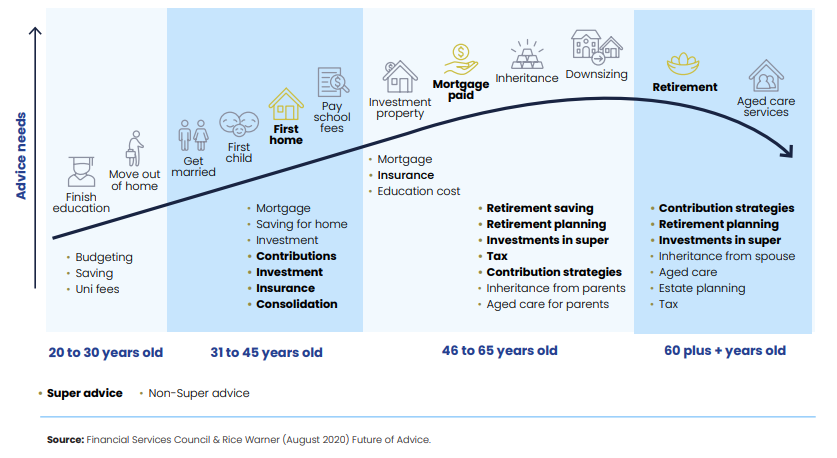
In the 20s and 30s, advice focuses on foundational goals like budgeting, saving, and managing university fees. For Gen Y clients, this stage often includes digital engagement and viewing financial advice as a form of self-improvement.
Between ages 31–45, priorities shift to home ownership, mortgage management, insurance, and building investment portfolios. Advisers help clients stay disciplined and avoid emotional decision-making, which research shows leads to stronger financial habits and resilience.
From 46–65, advice becomes more strategic, covering retirement planning, education costs, inheritance, and aged care. Clients in this stage report higher financial confidence and preparedness for unexpected expenses.
For those 60 and over, the focus turns to estate planning, aged care services, and downsizing. Research shows that advised individuals in this group experience greater peace of mind, improved mental wellbeing, and stronger family relationships.

Advice That Supports You Through Uncertainty and Change
In times of economic uncertainty, financial advice offers more than just protection, it provides clarity, confidence, and peace of mind. Clients consistently report that the benefits of working with a financial adviser far outweigh the costs, regardless of income, age, or gender.
As life becomes more complex and the next generation seeks more personalised and digitally accessible experiences, the role of financial advice continues to evolve. What remains constant is its ability to help people make informed decisions, stay on track, and feel secure about their financial future, no matter what stage of life they’re in.
References
¹ FAAA Value of Advice Consumer Research Report (2024)
² Vanguard Emotional & Time Value of Advice Survey (2025)
³ How advisers can save clients from financial stress in 2025 - FTAdviser
⁴ Financial Services Council & Rice Warner (2020) Future of Advice
Your Vision Financial Solutions Pty Ltd ABN 64 650 296 478 and its Advisers are Authorised Representatives of Fortnum Private Wealth Ltd ABN 54 139 889 535 AFSL 357306. This article has been prepared without taking into account your personal objectives, financial situation or needs.