

Transfer Balance Cap Increase to $2M from 1 July 2025

Following the release of the Consumer Price Index (CPI) for the December 2024 quarter on the 29th of January, it is now confirmed, based on current legislation, that the general Transfer Balance Cap (TBC) will be increased from $1.9M to $2M from 1 July 2025.
The Transfer Balance Cap is a lifetime limit on the amount an individual can move from a superannuation accumulation account to the tax-free retirement phase. This cap is designed to ensure that tax benefits from superannuation are distributed fairly and to prevent very wealthy individuals from taking excessive amounts into their tax-free retirement accounts.
The increase in the TBC is good news for retirees. With the new $2 million cap, couples can have a total of $4 million in the tax-free retirement phase.
TRANSFER BALANCE CAP HISTORICAL 2025-26
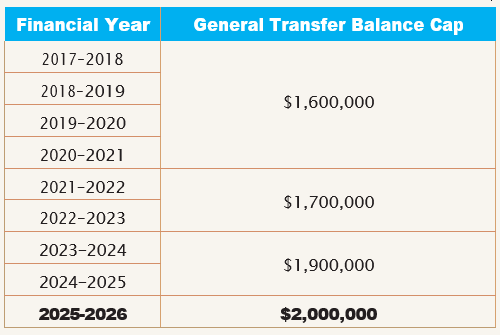
Indexation of the general TBC also has a flow-on effect on other rates and thresholds from 1 July 2025:
Defined Benefit Income Cap: increasing from $118,750 to $125,000.
Spouse Contribution Tax Offset Threshold: increasing from $1.9M to $2M.
Government Co-contribution Eligibility Threshold: increasing to $2M.
PLANNING CONSIDERATIONS

If your super balance exceeds $1.9M and you're planning to start a retirement income stream, consider waiting until after 1 July 2025 to benefit from the higher cap. However, this depends on your personal circumstances—consult your financial adviser.
It's important to note that the new $2 million cap will only apply in full to individuals who have not used any of their TBC before 1 July 2025. If you have already used part of your cap, your personal TBC will increase proportionally based on your unused cap space.
Your Vision Financial Solutions Pty Ltd ABN 64 650 296 478 and its Advisers are Authorised Representatives of Fortnum Private Wealth Ltd ABN 54 139 889 535 AFSL 357306. This article has been prepared without taking into account your personal objectives, financial situation or needs. Before acting on any information on this article you should consider the appropriateness of the information having regard to your objectives, financial situation and needs.