

Market Update: Escalation in the Middle East

Global headlines have focused on escalating tensions in the Middle East, raising understandable questions about what this may mean for markets and long-term investors.
Recent military actions involving the United States, Israel and Iran have increased tensions across the region. Reports indicate that military positions, energy infrastructure, airports and urban areas in several countries, including Iraq, Bahrain and the United Arab Emirates, have been affected. Major airports in Dubai, Abu Dhabi and Doha have also experienced disruptions.
As the situation continues to evolve, attention has turned to the potential implications for global energy supply and trade routes.
Why the Strait of Hormuz Matters
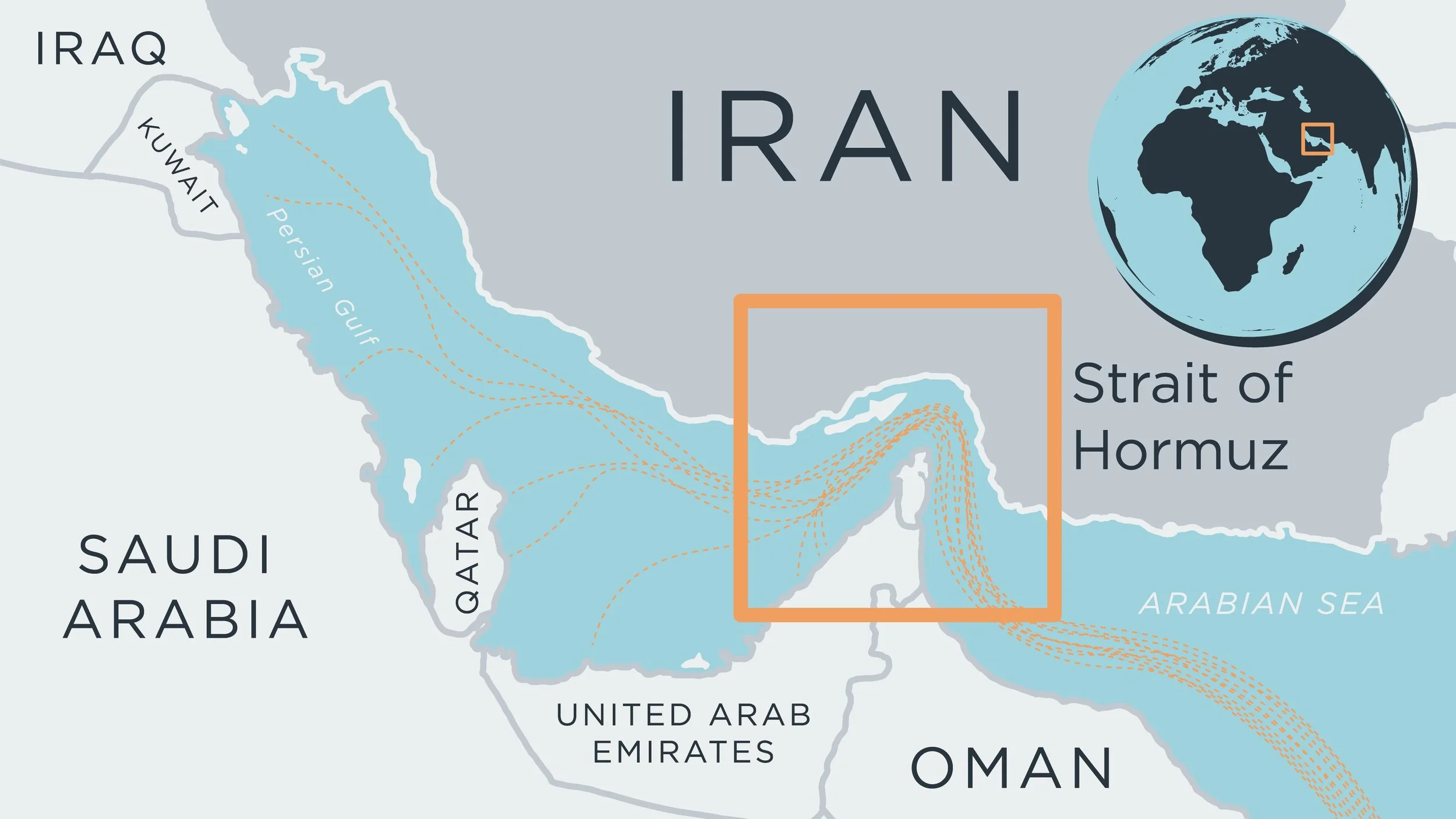
A key area of focus is the Strait of Hormuz, one of the world’s most strategically important shipping corridors. Around 20% of global oil supply and 25% of global liquid natural gas (LNG) passes through this narrow waterway, much of it bound for Asia and Europe.
While the strait has not formally closed, shipping activity has slowed and commercial disruptions have been reported. Any prolonged interruption could place upward pressure on global energy prices.
Initial Market Reaction

Despite the seriousness of these developments, market reactions have so far been relatively measured. Global equity markets have experienced some volatility, but major indices have remained broadly resilient. Energy and defence companies have seen gains, while some large technology companies have recovered following earlier weakness.
Other notable market movements include:
• Higher oil and gas prices, particularly in Europe
• A slightly stronger US dollar
• Modest gains in gold
• Increased bond market volatility as investors weigh inflation risks and safe-haven demand
If higher energy prices persist, they may begin to influence inflation expectations and central bank policy.
What History Tells Us
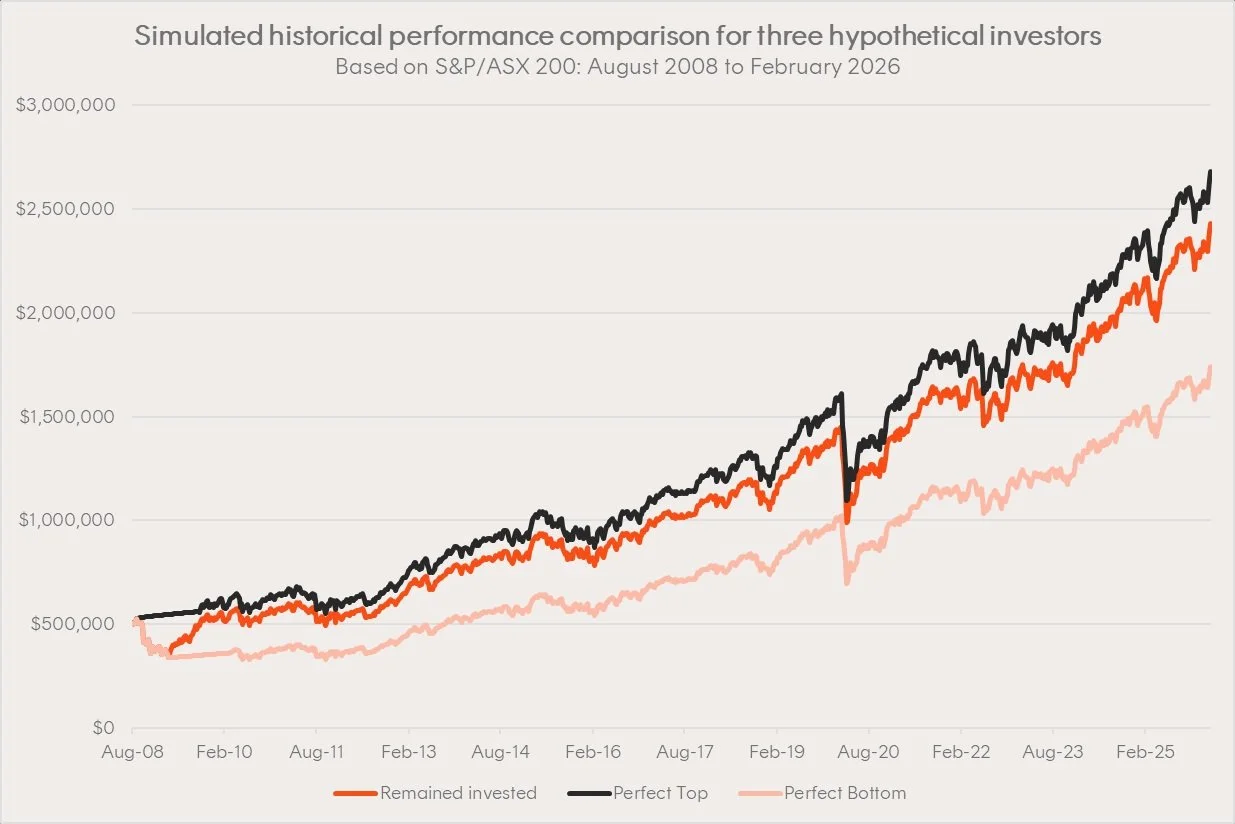
Source: Bloomberg, Betashares Direct. Returns are based on the S&P/ASX 200 and does not take into account any fees and costs. You cannot invest directly in an index. The ‘perfect top’ represents a hypothetical investor who moved their balance into a term deposit paying the RBA cash rate on 29 August 2008 and held this investment for one full calendar year, while the ‘perfect bottom’ represents a hypothetical investor who moved their balance into a term deposit paying the RBA cash rate on 6 March 2009 and held this investment for one full calendar year. Past performance (whether actual or simulated) is not an indicator of future performance. Provided for illustrative purposes only – not a recommendation to invest or adopt any investment strategy. Betashares, “Why the data suggests investors should stay invested”, March 2026.
Geopolitical events often create short-term volatility, but history shows markets generally absorb these shocks over time. Market declines of 1% or more occur regularly each year, and larger swings are also a normal part of investing. Over the long term, however, markets have historically recovered and continued to grow.
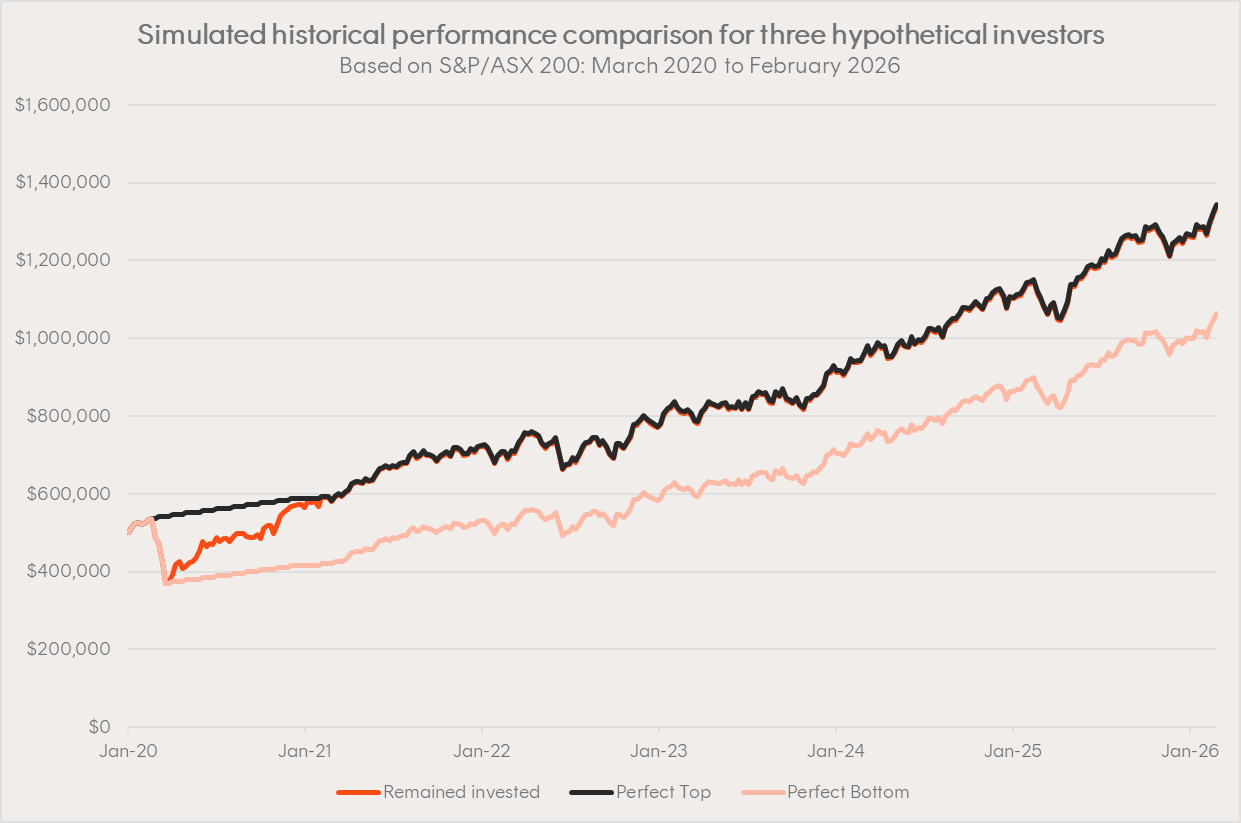
Source: Bloomberg, Betashares Direct. Returns are based on the S&P/ASX 200 and does not take into account any fees and costs. You cannot invest directly in an index. The ‘perfect top’ represents a hypothetical investor who moved their balance into a term deposit paying the RBA cash rate on 21 February 2020 and held this investment for one full calendar year, while the ‘perfect bottom’ represents a hypothetical investor who moved their balance into a term deposit paying the RBA cash rate on 20 March 2020 and held this investment for one full calendar year. Past performance (whether actual or simulated) is not an indicator of future performance. Provided for illustrative purposes only – not a recommendation to invest or adopt any investment strategy. Betashares, “Why the data suggests investors should stay invested”, March 2026.
The key difference in outcomes often comes down to investor behaviour during uncertain periods. Research and historical market simulations suggest investors who remain disciplined and stay invested tend to achieve better long-term results than those who attempt to move in and out of markets during volatile periods. Trying to perfectly time market tops and bottoms is extremely difficult, even for experienced professionals.
Portfolio Positioning
At the beginning of this year, portfolios were positioned with a diversified approach across global equities, including exposure to emerging markets, alongside a preference for active management in fixed interest. At this stage, our overall strategic positioning remains unchanged.
Geopolitical events and market volatility are a natural feature of investing. Reacting to short-term developments can sometimes create more risk than it removes, particularly for investors with long-term goals.
We continue to focus on:
Diversification across regions and asset classes
Maintaining disciplined portfolio structures
Monitoring developments closely as conditions evolve
We will continue to monitor the situation and provide updates if developments materially affect markets or economic conditions.
Why Staying Invested Matters

Recent volatility can make investors feel uneasy. When markets fall sharply, the natural reaction is often to step aside and wait for conditions to stabilise. However, history suggests this instinct can be costly.
Short-term declines are a normal feature of investing. Over time, markets have experienced frequent setbacks, yet have continued to recover and grow. The challenge for investors is not predicting volatility, but maintaining discipline through it.
Research comparing different investor behaviours during major market events shows that those who remain invested often achieve better long-term outcomes than those who attempt to move in and out of the market at the “right” time. Even small timing mistakes can significantly reduce long-term returns.
For investors who prefer a structured approach during uncertain periods, regular investing, often called dollar-cost averaging, can help reduce emotion and keep decisions aligned with long-term goals.
A Final Perspective
Periods of uncertainty can feel uncomfortable, but they are not unusual in long-term investing. Markets have navigated wars, geopolitical tensions, financial crises and global pandemics, and continued to progress over time.
For long-term investors, the key principles remain:
Staying disciplined
Maintaining diversification
Avoiding emotional reactions to short-term volatility
If you have any questions about recent developments or your investment strategy, please feel free to reach out to our team.
Sources:
Betashares, Why the data suggests investors should stay invested, March 2026
Entireti, March market update | Escalation in the Middle East, March 2026
Your Vision Financial Solutions Pty Ltd ABN 64 650 296 478 and its Advisers are Authorised Representatives of Fortnum Private Wealth Ltd ABN 54 139 889 535 AFSL 357306. This article has been prepared without taking into account your personal objectives, financial situation or needs.